Cleaning drains with baking soda and vinegar can freshen a drain and may loosen a very small, fresh blockage. It does not reliably clear grease, hair, soap scum or a clog that has built up for weeks. Baking soda is a base and vinegar is an acid, so they largely cancel each other out in the pipe. Plumbing companies and home-improvement writers agree on that much.
Some call it soda and vinegar, others say bicarb, but the chemistry is the same. This guide in Marina, CA explains what it can do, what it cannot, how to use it safely, and the point where you should stop and call. If a drain is fully blocked or backing up, call (855) 575-2890.
What the mixture can actually do
When baking soda meets vinegar, the mix fizzes. That fizzing can push out small bits of debris sitting near the top of the drain. One plumbing company writes that the combination can clear minor clogs, and that the fizz may dislodge small lodged material.
It can also take the edge off a musty smell by rinsing the first few inches of pipe. Think of it as a light rinse, not a repair. The reaction is over in minutes, and what is left is mostly salty water.
What it does not do
Several plumbing companies say the mixture cannot dissolve the grease, hair and soap scum behind a real clog, so the drain tends to clog again soon. One says there is very little evidence to support the claim that it clears serious clogs.
That matches how clogs form. Kitchen sinks collect food waste and grease. Tubs and showers collect hair and soap scum. Toilets clog on wipes and too much paper. A fizz cannot melt a mat of hair or a ring of cooled fat.
| Problem | Baking soda and vinegar | Better first step |
|---|---|---|
| Fresh slow drain with a mild smell | May help a little | Rinse with hot tap water, then clean the strainer |
| Hair in a tub or shower | Unlikely to clear it | Pull it out with a plastic drain tool |
| Grease in a kitchen sink | Does not dissolve it | Remove and clean the trap, then plunge |
| Toilet clogged with wipes | No effect | Plunger, then a closet auger |
| Several drains slow or backing up | No effect | Stop using water and call a plumber |
How to try it safely
- Remove standing water and any visible debris from the drain opening.
- Pour about 1/3 cup of baking soda down the drain, then slowly add 1/3 cup of white vinegar.
- Cover the opening loosely with a stopper or damp cloth for 10 to 15 minutes. Do not seal a drain tightly, because gas pressure can build.
- Flush with hot tap water, not a boiling kettle, especially if the drain pipe is plastic or old.
- Test the drain. If it still runs slowly, move to a plunger or trap cleaning rather than repeating the mix.
Safety rules
Never mix this with a store-bought chemical drain cleaner, and never use it right after one. Reactions between cleaners can release harmful fumes and splash caustic liquid. Keep your face back and wear gloves and eye protection.
Does it harm pipes?
Opinions differ, and no source we reviewed cites tests. Some plumbing companies warn that repeated vinegar may wear down rubber seals and could affect older copper or brass fittings over time. A home-improvement publication says neither baking soda nor white vinegar will damage clogged pipes and calls the mix gentler than chemical cleaners.
The practical takeaway is moderation. An occasional rinse is low risk. Pouring vinegar into the same drain every week adds little benefit and gives seals more exposure. If your home has older fixtures, do not make it a habit.
Better tools for a real slow drain
- A plunger sized for the drain, used with the overflow opening blocked on a sink or tub.
- Removing and cleaning the P-trap under the sink, the easiest way to clear a simple kitchen or bathroom clog.
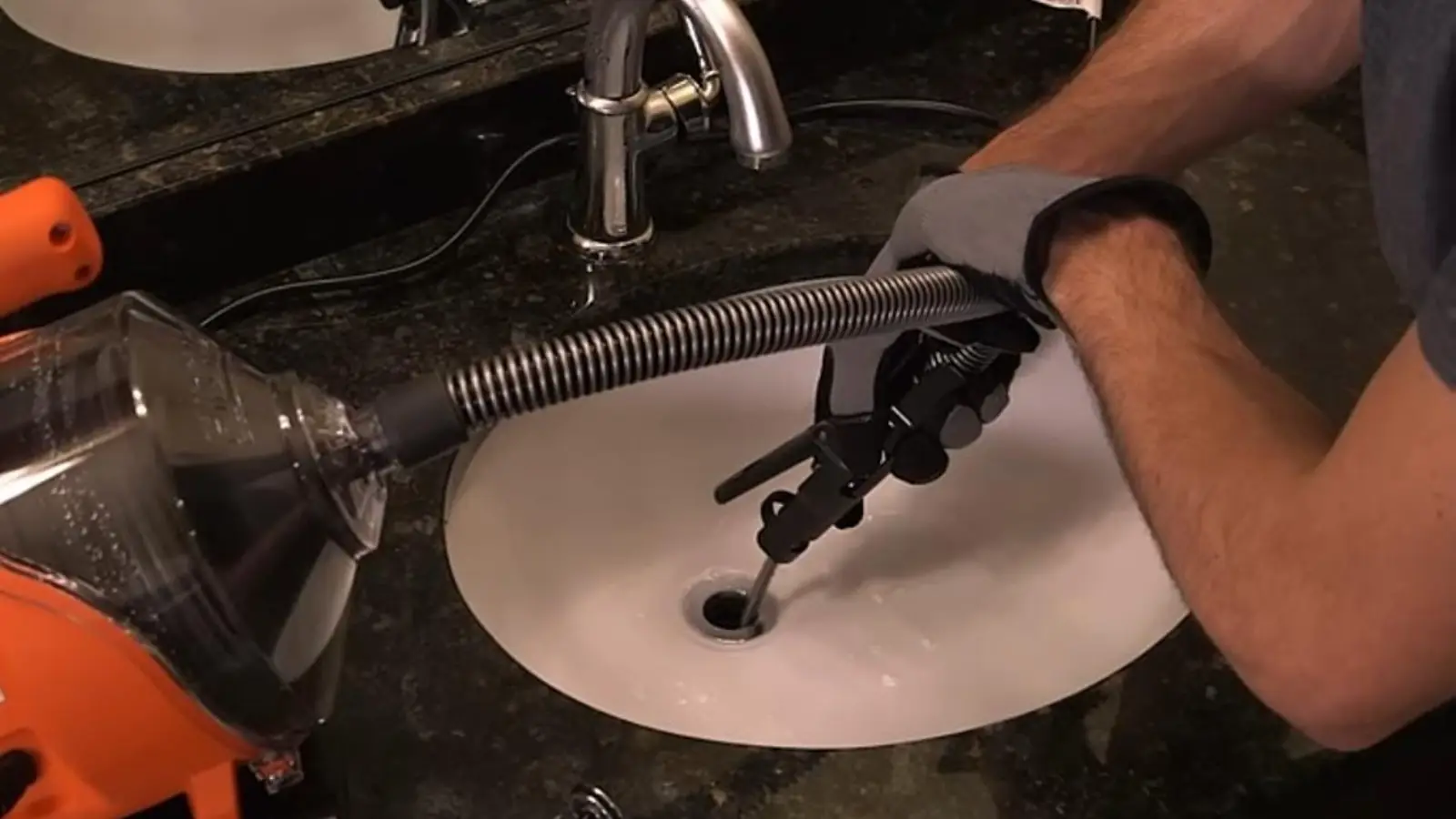
- A hand-cranked drain snake for hair and soap in a tub or bathroom sink.
- A strainer in every shower, tub and kitchen drain to catch debris before it enters the pipe.
- An enzyme cleaner as maintenance, not as a rescue for a blocked drain.
If a drain stays slow after one or two of these, a drain cleaning visit is usually quicker and cheaper than repeated experiments. For long or stubborn clogs in older lines, our hydro jetting page explains when a camera look should come first.
When to stop and call
- Water backs up in a second fixture when you run the first one.
- A toilet bubbles or gurgles when the washer drains.
- The clog returns within days of clearing it.
- There is a sewage smell, or water pools around a floor drain.
- You already poured a chemical cleaner into the drain, so tell the plumber before any tool goes in.
Multiple fixtures backing up together points to the main line, not a single trap. At that point more fizzing cannot help.
Marina notes: what goes down the sewer system
Downstream of your lateral, Marina Coast Water District runs the pipes and pumps that move wastewater on to the Monterey One Water treatment plant. Your side sewer, the pipe from the house to the district main, is the owner's to maintain under district code. A grease clog in your own line is your repair, which is a good reason to keep fat out of the drain.
The district's FOG program, meaning fats, oils and grease, applies to food service businesses. For homes, the district's guidance is simple: never pour fats, oils or grease down a sink or garbage disposal. It also states that hot water and soap do not eliminate FOG, because it will eventually reform and solidify in pipes.
For you, that means running hot water after the pan is not a fix. Wipe the pan with a paper towel and put the fat in the trash.
MCWD also says to flush only human waste and toilet paper, and that unapproved wipes can clog sewer lines and pipes. It lists multiple interior drains backing up at once as a warning sign of a larger problem. To report a sewer backup or spill, call (831) 384-6131 or (831) 883-5900.
The same habits apply in Seaside and Castroville, though your sewer provider may differ. Check with your own district about local rules.
Frequently asked questions
It can clear a minor, fresh blockage near the top of a drain. It rarely clears grease, hair or soap scum that has built up, because it cannot dissolve them. Treat it as a light rinse, not a repair.
About 1/3 cup of baking soda followed by about 1/3 cup of white vinegar is a common home amount. Let it sit 10 to 15 minutes, then flush with hot tap water. More does not work better.
Hot tap water is safer. Boiling water can soften or warp some plastic drain pipes and can crack a cold porcelain sink or toilet bowl. Use hot tap water instead.
Occasional use is generally low risk, but repeated vinegar may wear on rubber seals and older metal fittings, according to some plumbing companies. Use it rarely and rinse well. If your home has a septic tank, ask a plumber first.
No. Mixing cleaners can cause dangerous fumes and splashing. If a chemical cleaner is already in the drain, tell the plumber before they start work.
Removing and cleaning the trap is the easiest fix for a simple clog. A plunger helps too. If grease is the cause, hot water and soap alone will not keep it clear, and a cleaning visit may be needed.
The smell often comes from buildup farther down, a dry trap, or a vent problem. A fizz rinses only the first few inches. Run water in rarely used drains, and call if the smell stays.
MCWD's grease program applies to food service businesses, not homes. Even so, the district says never pour fats, oils or grease down a sink or garbage disposal. Homes that follow that rule have fewer kitchen clogs.