A planned water heater installation in Marina, CA gives you time to choose the right unit instead of the nearest one. Whether the old heater still works or you are adding hot water to a remodel, a licensed and insured plumber can walk through type, size, venting and code items with you.
You get a clear price before work starts, and we offer same-day appointments when available. This page explains the choices, the code details that matter in California, and how Marina's water affects what you buy.
Planning your water heater installation
Good installs start with a few facts. We look at where the heater sits now, what fuel feeds it, how many people use hot water, and whether the vent, gas line or circuit can support a different unit.
- Fuel at the house: natural gas, propane or electric only.
- Tank label: capacity, age and model number.
- Location: garage, closet, attic, utility room or outdoors.
- Household size and how many baths run at once.
- Any plan to move the heater, such as a remodel or a garage conversion.
Moving a heater costs more than swapping in place, because gas, water, vent and drain connections all move. If you are considering a new location, tell us early.
Safety steps before any heater work
A gas smell means you leave first. Get outside, phone 911 from a distance, then reach PG&E at 1-800-743-5000.
- Close the cold water inlet if a tank is leaking.
- Switch off the heater's breaker only if you can reach the panel safely and the floor is dry.
- Keep children and pets back, since water from a failing heater can be hot enough to scald.
Tank, tankless or heat pump: how the types compare
| Type | How it works | Typical installed range |
|---|---|---|
| Tank-style (gas or electric) | Heats and stores 30 to 80 gallons | $600 to $2,500 |
| Tankless | Heats water as it flows, no storage | $1,400 to $3,900 |
| Heat pump (hybrid) | Pulls heat from air, backed up by electric elements | $1,200 to $3,500 |
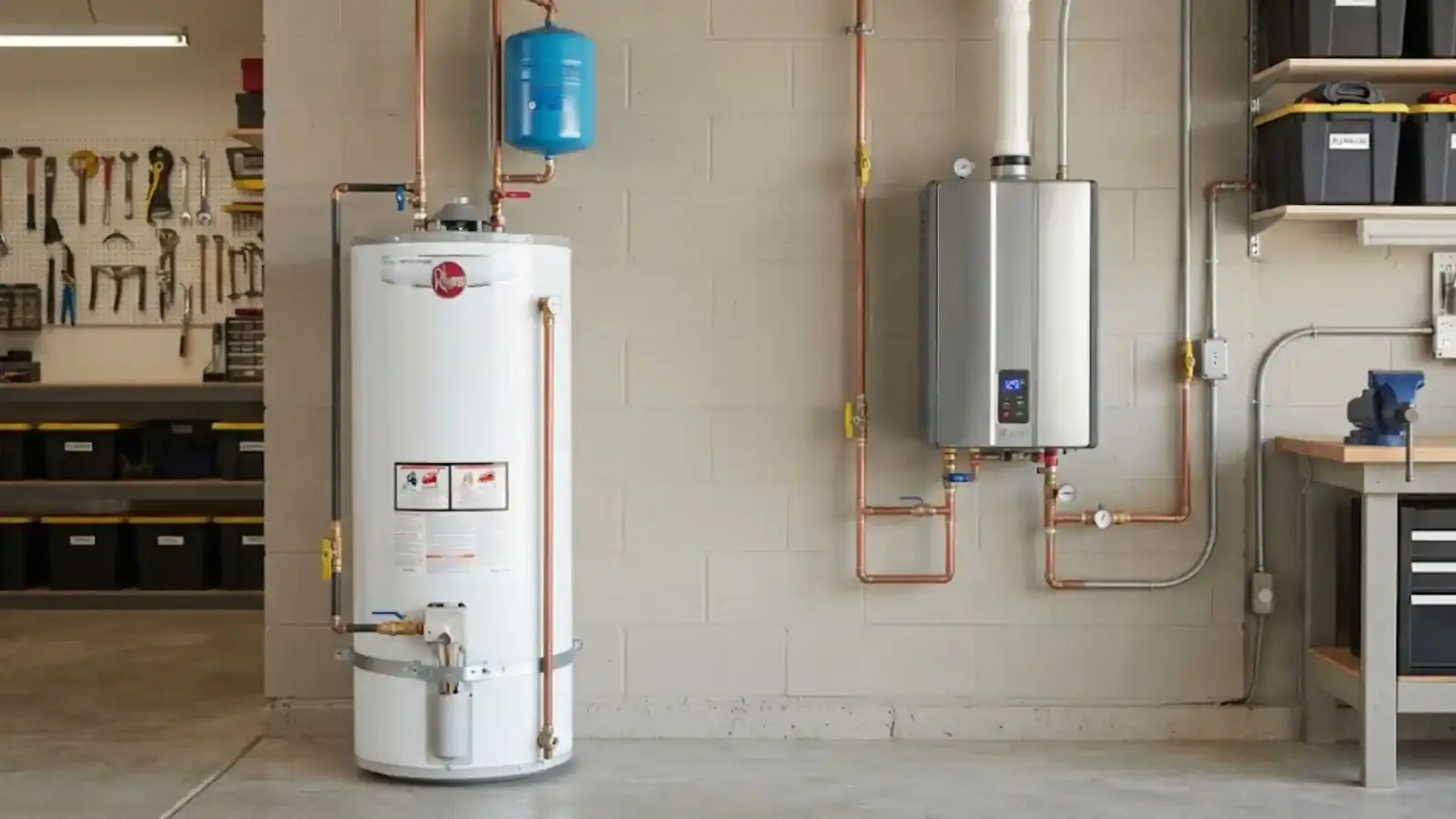
Tank heaters cost less up front and are simple to service. Tankless units save floor space and are expected to last longer, about 20 years in one national guide, but they need larger gas lines or electrical service. Heat pump units are efficient but need room around them and a drain for condensate.
For the details on on-demand units, see our tankless water heater page. If your existing heater is failing now, water heater replacement covers the faster path.
Sizing the heater for your household
A tank that is too small runs out of hot water on busy mornings. One that is too large wastes energy keeping extra water warm. Tank capacity usually follows the number of people in the home and the number of bathrooms.
Tankless units are sized by flow rate in gallons per minute and by temperature rise, so the number of fixtures running together matters more than household size. Large families with two showers at once often need a larger unit, or two.
Bigger tanks cost more. A 75-gallon heater typically runs $1,500 to $3,400 installed in national guides, with hybrid models higher. Match size to real use rather than buying the largest option.
Code details that affect the install
According to the California Plumbing Code and the state Health and Safety Code, water heaters carry specific safety and anchoring requirements. These are the items we plan for on every install.
| Item | What it does | What to know |
|---|---|---|
| Seismic bracing | Straps the tank so it cannot tip in an earthquake | Required by Health and Safety Code 19211 for replacement units, and the California Plumbing Code points to the same rule |
| Temperature and pressure relief valve | Opens if the tank overheats or overpressurizes | Needs a discharge pipe that points down and ends at a safe spot, with no shutoff valve |
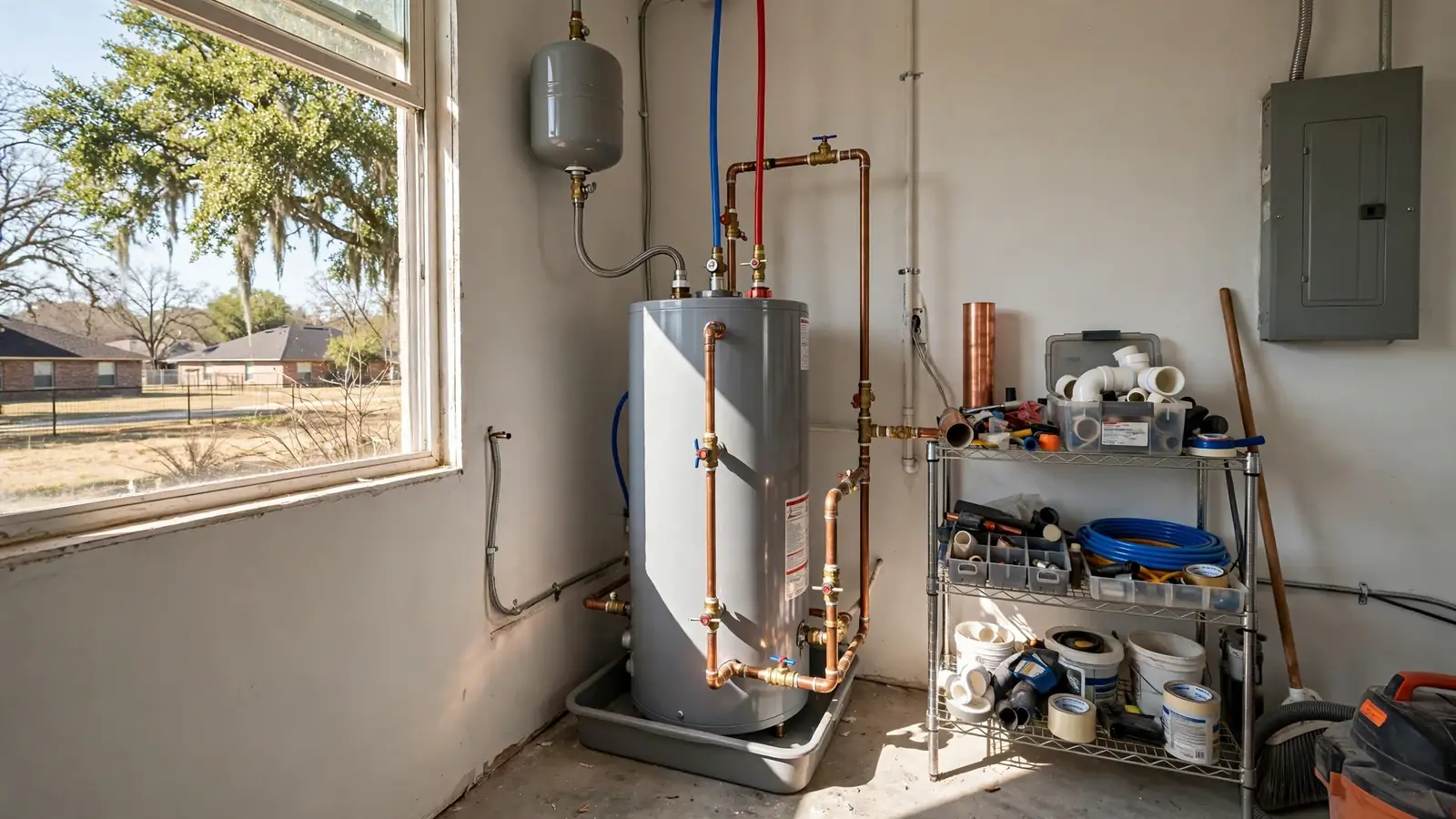
| Expansion tank | Absorbs pressure when heated water expands | Needed in closed systems with a check valve or backflow device, and not for tankless |
| Venting or electrical | Carries exhaust out, or powers the unit | Gas vents must be sized and sloped correctly, and circuits must match the heater |
| Permit | Lets the city inspect the work | Ask the City of Marina Building Division at (831) 884-1241 |
Strapping typically means two straps, one in the upper third and one in the lower third of the tank, with the lower strap at least 4 inches above the controls. That placement keeps the tank steady without blocking the gas controls.
We do not state a Marina permit rule without checking it. The Building Division can tell you what applies to your project, and heat pump or fuel-switch questions are best settled with them before purchase.
Where the heater goes: garage, closet or attic
Location drives labor. A garage install is usually the most direct. A closet needs clearance for combustion air and the vent. An attic needs a pan and drain line so a failure does not soak the ceiling below, and national guides show attic installs adding roughly $200 to $1,000.
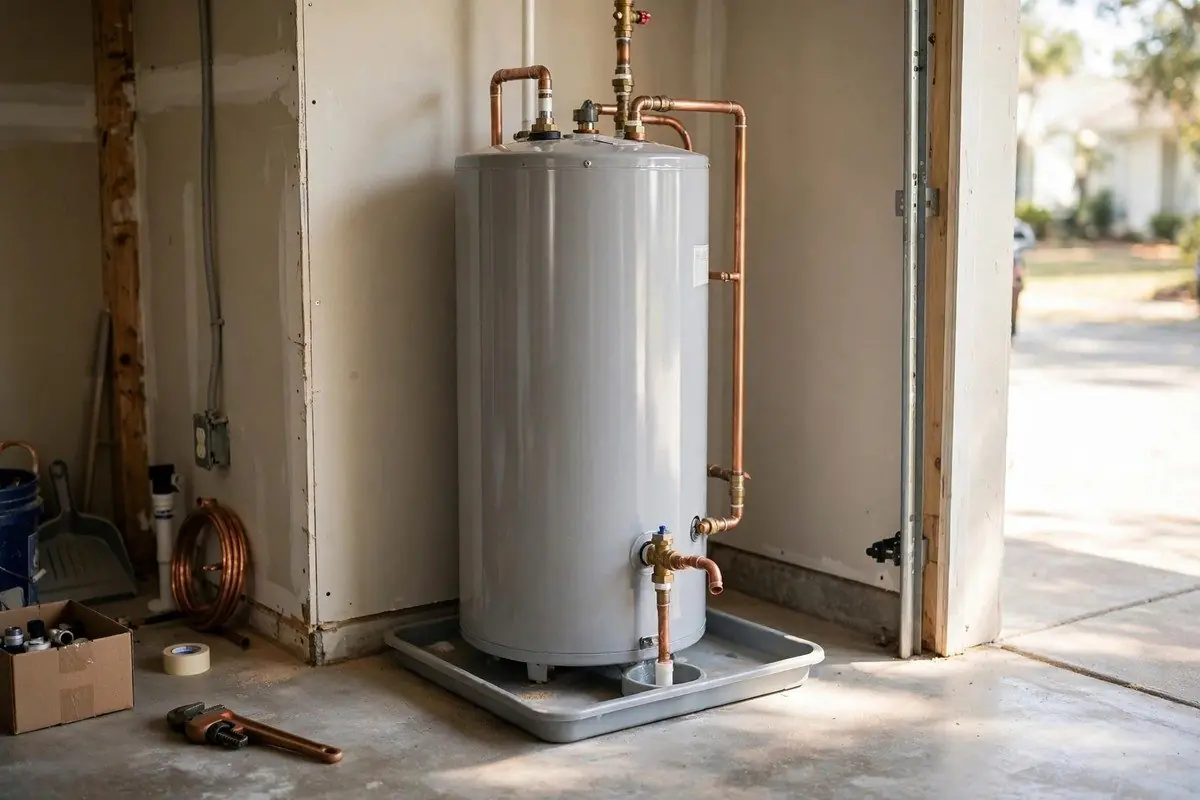
A drain pan with a line to a safe spot is worth adding anywhere a leak could reach finished floors. Water heaters fail eventually, and a pan limits what happens when yours does.
What goes into the price
Three things shape most installation quotes. Unit type and tank size come first, since labor is often about half the budget. Fuel and venting changes come second. Access and location come third.
| Add-on | Typical range |
|---|---|
| Expansion tank, plus labor | $90 to $350 |
| Permit, where required | $25 to $300 |
| Gas connection permit | $50 to $300 |
| Power vent upgrade | $600 to $1,100 |
| Old tank removal and disposal | $50 to $150 |
These ranges are national, and a Marina quote can land inside or outside them. We give a clear price before work starts, with each item listed.
Marina water and your new heater
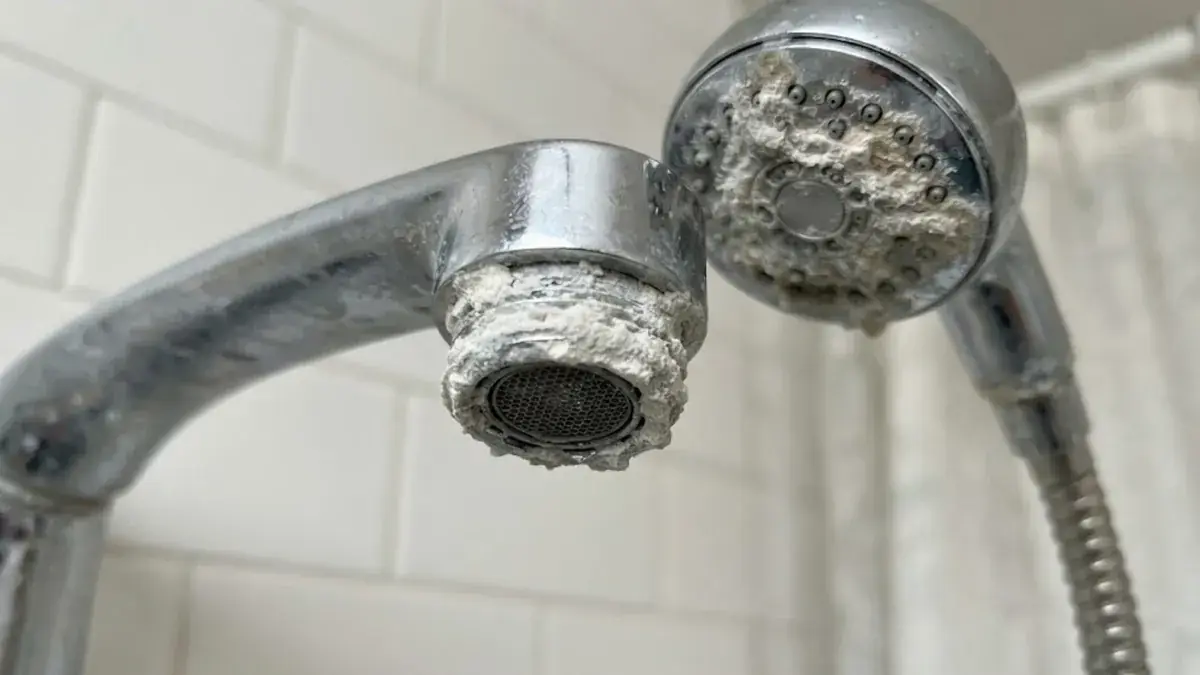
MCWD's 2025 water quality report puts average hardness near 10.5 grains per gallon, within a range of 4.9 to 19.3. The water is chlorine-disinfected. Hard water leaves scale on heating surfaces, so a new heater benefits from regular flushing, as the district recommends.
If you are weighing scale protection at the same time, our water softener and filtration page explains what treatment does and does not do. Call (855) 575-2890 any time, since our 24/7 line is open for planned work and urgent calls alike.
Frequently asked questions
A straightforward tank swap is often a matter of hours. Fuel changes, new venting, tight closets and attic locations take longer. We give you a realistic window when we price the work.
Only if the current location is a problem. Moving means new gas, water and vent runs, which adds cost. Most homeowners keep the heater where it is.
National guides put tank-style installs at roughly $600 to $2,500, tankless at $1,400 to $3,900, and heat pump units at $1,200 to $3,500. Marina prices vary, and we provide a clear price before work starts.
California Plumbing Code calls for an expansion tank on closed systems with a check valve or backflow device. Many homes have one for that reason. We check your setup and tell you whether you need one.
Yes. California law requires new and replacement water heaters to be braced, anchored or strapped for earthquakes. We include strapping in the installation.
Often, if there is enough open space around the unit and a place to drain condensate. Ask the City of Marina Building Division at (831) 884-1241 about current rules for your address.
Yes. We drain and remove the old tank as part of the job. Disposal is a normal line item, and national guides show it at about $50 to $150.
It can help if scale is a concern, since local water is moderately hard to hard. A softener is a separate system with its own connections, so we can plan both together.