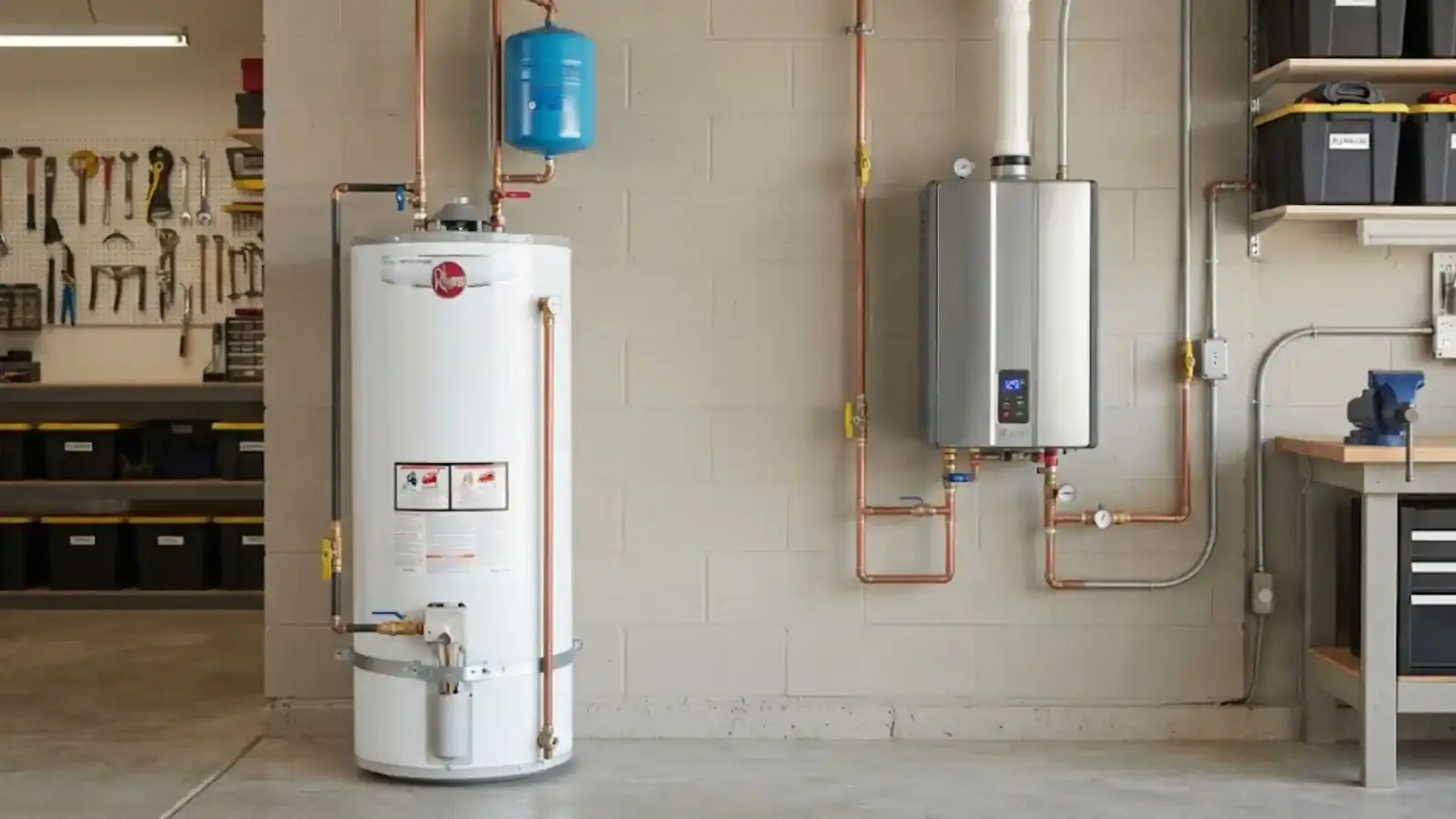
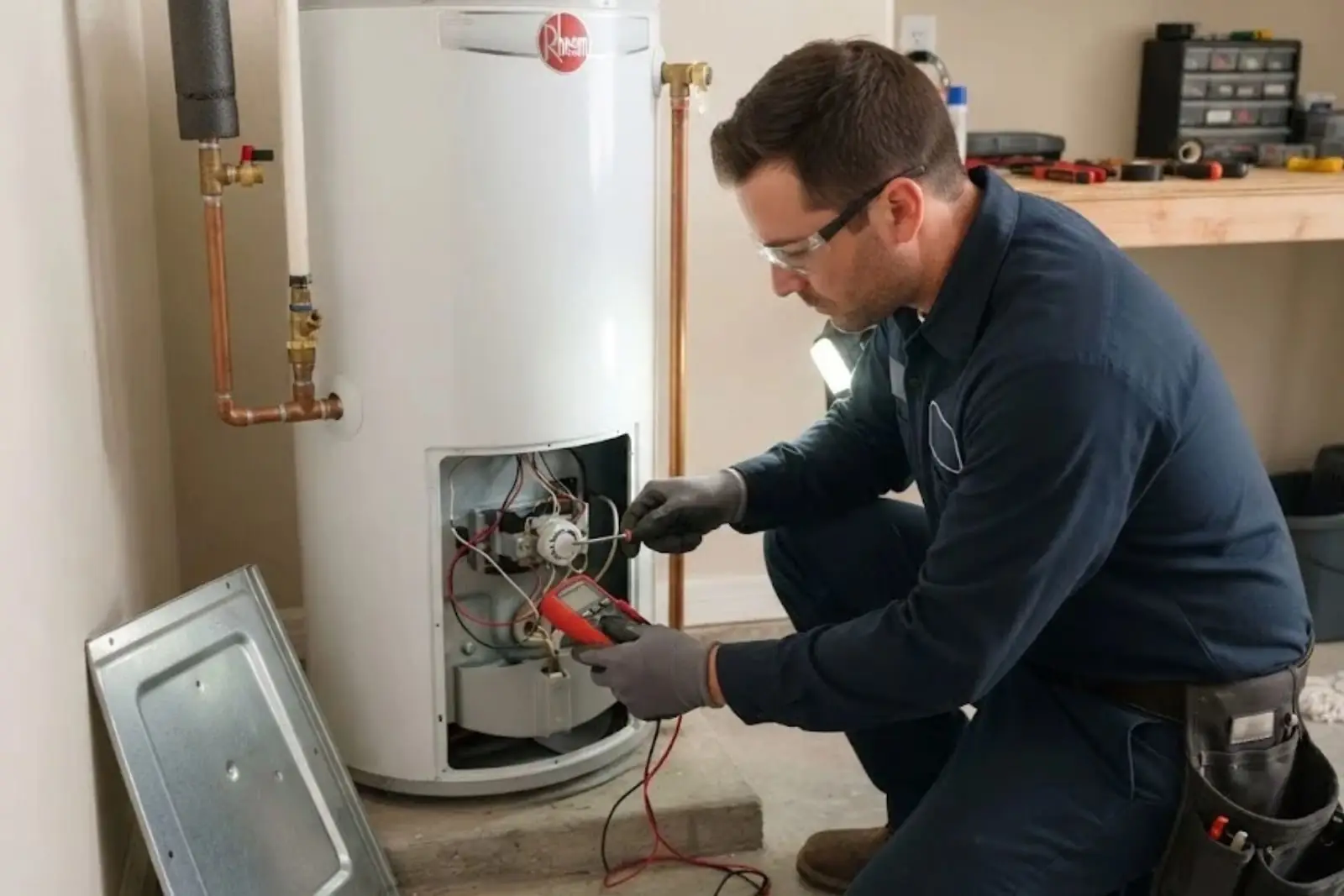
To flush a water heater in Marina, CA, you turn off the fuel or power and close the cold supply. Then you drain the tank through a hose, rinse it with short bursts of cold water until it runs clear, and refill it before turning the heater back on. The whole job takes about an hour for a standard tank heater and needs only a garden hose and a bucket.
Flushing matters because minerals and sediment settle at the bottom of the tank. Marina Coast Water District reports moderately hard water, and its own advice is to flush your heater regularly. Below are the safety checks, steps for gas and electric tanks, a note on tankless units, and the signs that mean it is time to call (855) 575-2890.
Why Marina's water makes flushing worth it
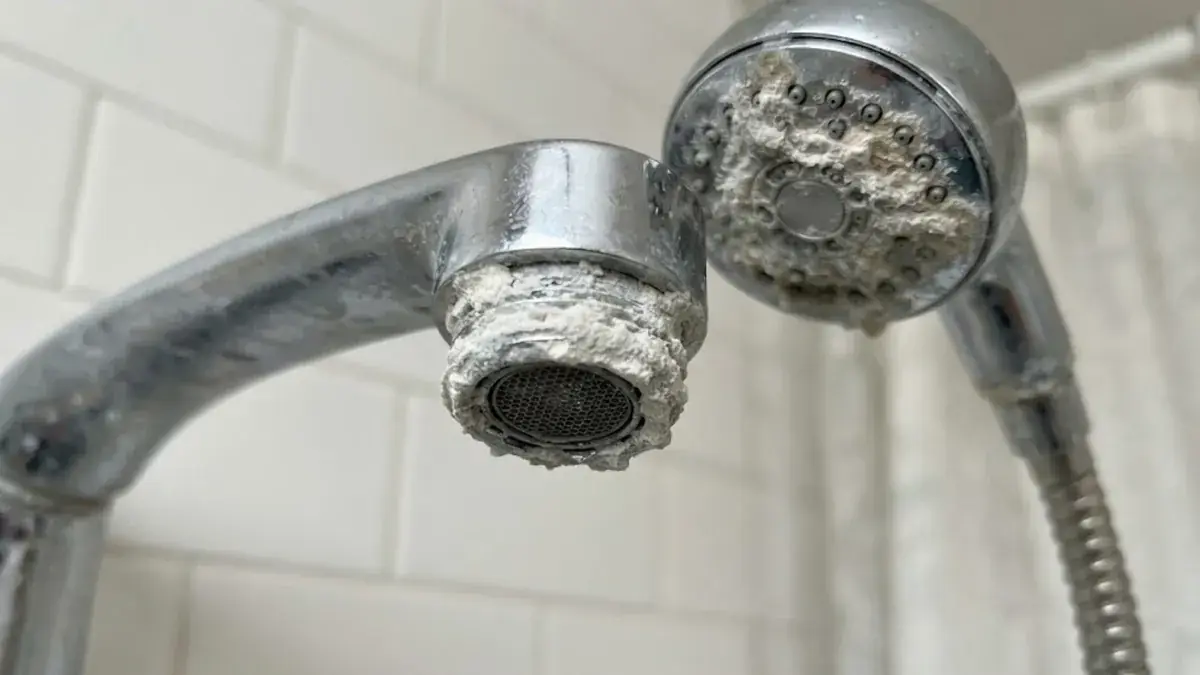
Hard water carries dissolved calcium and magnesium. Heat pushes them out of the water, and they settle as scale and sediment at the base of the tank. A thick layer insulates the water from the burner or element, so the heater works harder, may rumble when it fires and can wear out sooner.
MCWD's 2025 water quality report shows average hardness of 180.3 mg/L, about 10.5 grains per gallon, with readings ranging from about 4.9 to 19.3 grains per gallon. That is moderately hard to hard water. MCWD notes there is no drinking water standard for hardness and recommends flushing the water heater regularly, following the maker's instructions.
Before you start: safety checks
Water inside a tank can be hot enough to scald. Take your time and read the manual for your model, since drain valves and controls differ.
- Wear closed shoes and gloves.
- Let the water cool for an hour or two, or draw some hot water first.
- Know where the cold water shutoff, the gas valve and the breaker are.
- Check that the drain hose reaches a floor drain, a bucket or the outdoors.
- Never leave the heater running with the tank empty.
If you smell gas
Leave the house at once. Call 911 from a safe distance, then call PG&E at 1-800-743-5000. Do not use switches, flames or phones near the heater. Do not try to flush or relight a heater when you smell gas.
Flushing a gas tank water heater
Turn the gas control to pilot or off
Follow the label on the control. Do not turn off the gas supply at the meter unless the manual says to. If you shut off the gas at the house, PG&E says you must call it to restore service.
Close the cold water supply
The shutoff valve is on the pipe that feeds the top of the tank. Turn it clockwise until it stops.
Open a hot tap
Open a hot faucet upstairs or at the nearest sink. This lets air into the system so the tank drains.
Attach a hose and drain
Screw a garden hose onto the drain valve near the bottom, run it to a drain or outdoors, and open the valve. The first water may be cloudy, with flakes or grit.
Rinse the tank
Once it is empty, open the cold supply for a few seconds at a time, then close it and drain again. Repeat until the water runs clear.
Close the drain and refill
Close the drain valve and remove the hose. Open the cold supply and leave the hot tap open until a steady stream with no air comes out. Then close the tap.
Relight and check
Follow the label to restore gas and relight the pilot if needed. Check the drain valve and connections for drips. If you are unsure how to relight safely, stop and call a plumber.
Electric tank differences
The steps match the gas version with one key change. Turn off the breaker for the water heater before you drain anything, and do not turn it back on until the tank is full. Heating elements burn out within seconds when they run dry.
- Switch off the breaker before draining.
- Refill fully with a hot tap open before restoring power.
- Listen for hissing or popping after power returns.
- Check the breaker is the correct one for the heater.
If the heater stopped producing hot water, a flush may not fix it. A bad element or thermostat is a repair job, and our water heater repair page covers what to expect.
Tankless heaters need descaling, not draining
A tankless unit has no large tank to drain. Scale builds up in the heat exchanger instead. The maker's instructions call for a descaling flush, where a pump circulates a mild acid solution or vinegar through the unit using the service valves.
This takes more tools and care than a tank flush, and the process varies by brand. Follow the manual or ask a plumber, especially if the unit throws an error code. Our tankless water heater page explains maintenance and service.
Tank flush versus other maintenance
| Task | What it does | Who should do it |
|---|---|---|
| Flush the tank | Clears sediment and scale | Homeowner, if comfortable |
| Test the pressure relief valve | Confirms the valve opens | Plumber or careful homeowner |
| Check or replace the anode rod | Slows tank corrosion | Plumber |
| Check the seismic straps | Keeps the heater upright in a quake | Homeowner looks, plumber fixes |
| Descale a tankless unit | Removes scale from the heat exchanger | Plumber or experienced homeowner |
HomeAdvisor's 2025 guide puts an anode rod replacement at about $50 to $150 including labor, a national marketplace figure. Angi's 2026 guide says conventional tanks last about 8 to 12 years. California law requires water heaters to be braced, anchored or strapped against earthquake movement, so check that straps are tight while you are there.
When to stop and call a plumber
- The drain valve will not open, or leaks after you close it.
- The water stays rusty or full of sand after repeated rinsing.
- You smell gas, or the pilot will not stay lit.
- The tank leaks from the body or the bottom.
- The heater is old and the valves are corroded.
- You cannot safely shut off the water, power or fuel.
Old drain valves can seize or break when turned. A plastic valve may snap, and a leaking valve may need replacing. If the tank itself leaks, flushing will not help, and it may be time to look at water heater replacement.
What MCWD's water report means for your heater
Marina Coast Water District pumps groundwater from seven wells in the Salinas Valley Groundwater Basin and disinfects it with chlorine. Its 2025 report lists average total hardness of 180.3 mg/L, or 10.54 grains per gallon, with a range from 84 to 330 mg/L. MCWD reports one system-wide figure, so your tap could sit above or below the average.
The practical point is simple. Hardness is not a regulated drinking water standard, and it does not make water unsafe. It does leave scale on heating surfaces. MCWD's own guidance is to flush the water heater regularly according to the maker's instructions, which makes a yearly flush a sensible habit.
If scale keeps coming back quickly, a water softener or filtration system reduces how much builds up. California also expects water heaters to be braced, anchored or strapped against earthquake movement under Health and Safety Code 19211. Use the flush as a prompt to check the straps. Ask the Building Division at (831) 884-1241 whether a permit applies before you replace a heater.
We serve Marina, Seaside and Castroville. If your heater is stubborn, call and we will take a look.
Frequently asked questions
Once a year is a common guideline, and MCWD recommends regular flushing following the manufacturer's instructions. Hard water may justify checking more often. Your manual gives the maker's schedule.
You can, but go carefully. A heavy sediment layer can clog the drain valve. If the valve will not flow, stop and call a plumber instead of forcing it.
No. Gas units should be set to pilot or off, and electric units need the breaker off. An electric element left on with an empty tank burns out quickly.
About an hour for most tank heaters, plus cooling time before you start and refill time at the end. Heavy sediment slows the drain.
MCWD's 2025 report shows an average of about 10.5 grains per gallon, ranging from about 4.9 to 19.3. That is moderately hard to hard. The district reports one system-wide figure, not separate numbers by neighborhood.
Check your manual first. Vinegar is mostly used for tankless descaling. For a tank, plain water flushing is the standard method, and acids can harm some parts.
That often means sediment trapped under the water. A flush may help. If the noise continues or the tank leaks, call a plumber.
Yes. Call (855) 575-2890, and we will schedule a visit. We answer 24/7, offer same-day appointments when available, and give a clear price before work starts.