The main signs of a slab leak in Marina, CA are a warm spot on the floor, running water you hear when everything is off, a water meter that keeps moving, a bill that climbs for no reason and damp flooring. A slab leak is a break in a water line that runs in or under the concrete foundation. You cannot see it, so the symptoms are how you find it.
One sign alone is not proof. Two or three together are a good reason to act. This guide covers each sign, the meter test that separates a slab leak from a toilet problem, and how detection works. If you suspect a slab leak, call (855) 575-2890. We answer 24 hours a day.
Signs you can feel, hear and see
Hot-water lines under a slab leak heat the concrete above them. You may notice a floor spot that is warm to bare feet, especially in a hallway or near the kitchen. That is one of the most specific signs, since nothing else makes a patch of floor warm.
- A warm or hot patch on tile, wood or carpet.
- A hissing or trickling sound that continues when all taps are closed.
- A damp spot, a stain, or a musty smell on the floor.
- Floor coverings that lift, buckle or discolor.
- Cracks in tile or grout that appear without a cause.
- Low water pressure that does not match the season.
These signs also show up with other problems. A damp carpet could come from a roof or window leak. A hissing sound may be a toilet. That is why the next two checks matter.
The meter and the bill: your best early warning
A slab leak runs all day and all night. That shows up on your bill as a steady rise, and on the water meter as movement when no one is using water. Read the meter, turn off all water use for one hour, then read it again. If the numbers moved, water is going somewhere.
Next, close the main shutoff valve at the house and watch the meter. If it still moves, the leak is between the meter and the house. If it stops, the leak is inside the house, which could be a toilet, a wall line or a slab line. Our guide to the leak detection process explains the next step.
Hot or cold?
A warm spot points to a hot-water line. A damp spot with no warmth could be a cold line, which is harder to feel. Either way, the meter test is the check that works for both, so do it first.
How plumbers find a slab leak without demolition
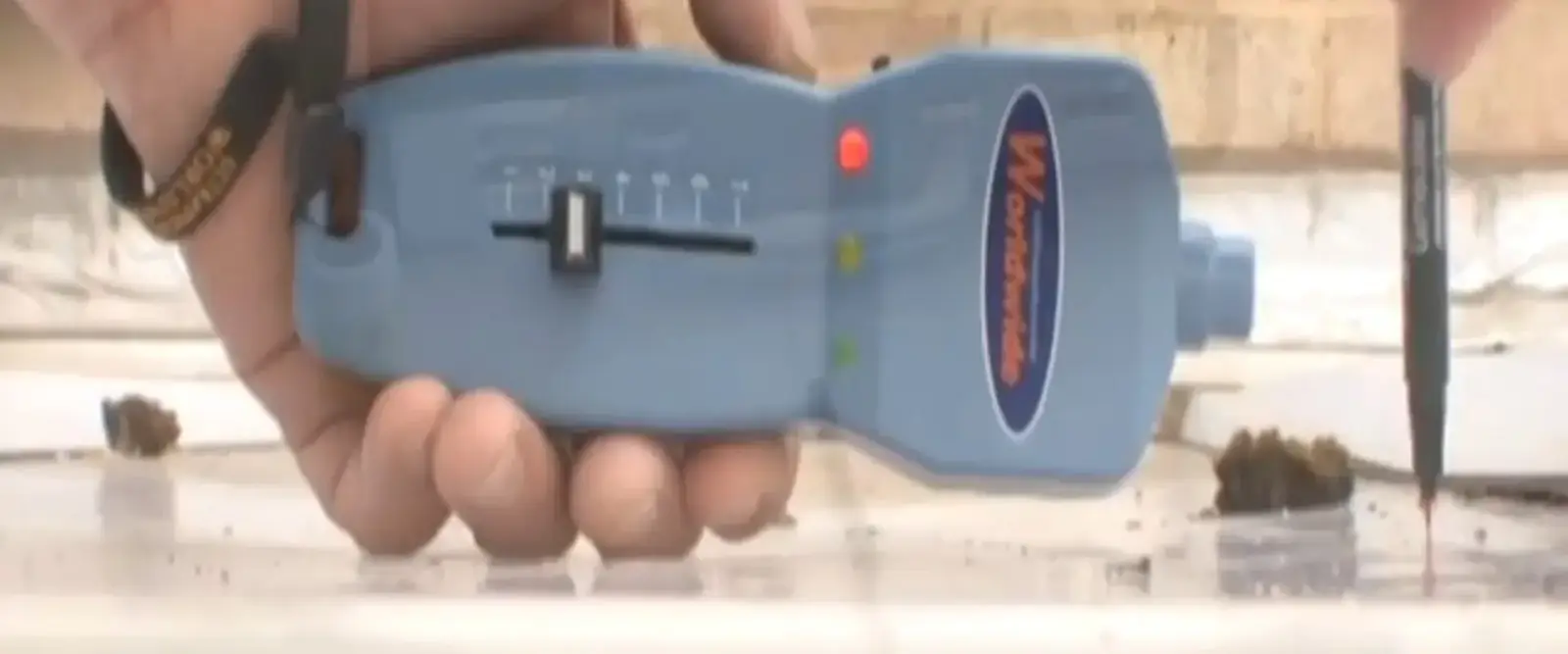
Detection narrows the search before anyone opens a floor. A plumber typically uses several methods together:
| Method | What it does | Best for |
|---|---|---|
| Pressure test | Isolates a line and watches for a pressure drop | Telling which line is leaking |
| Acoustic listening | Microphones pick up the sound of water escaping | Pinpointing a spot on the floor |
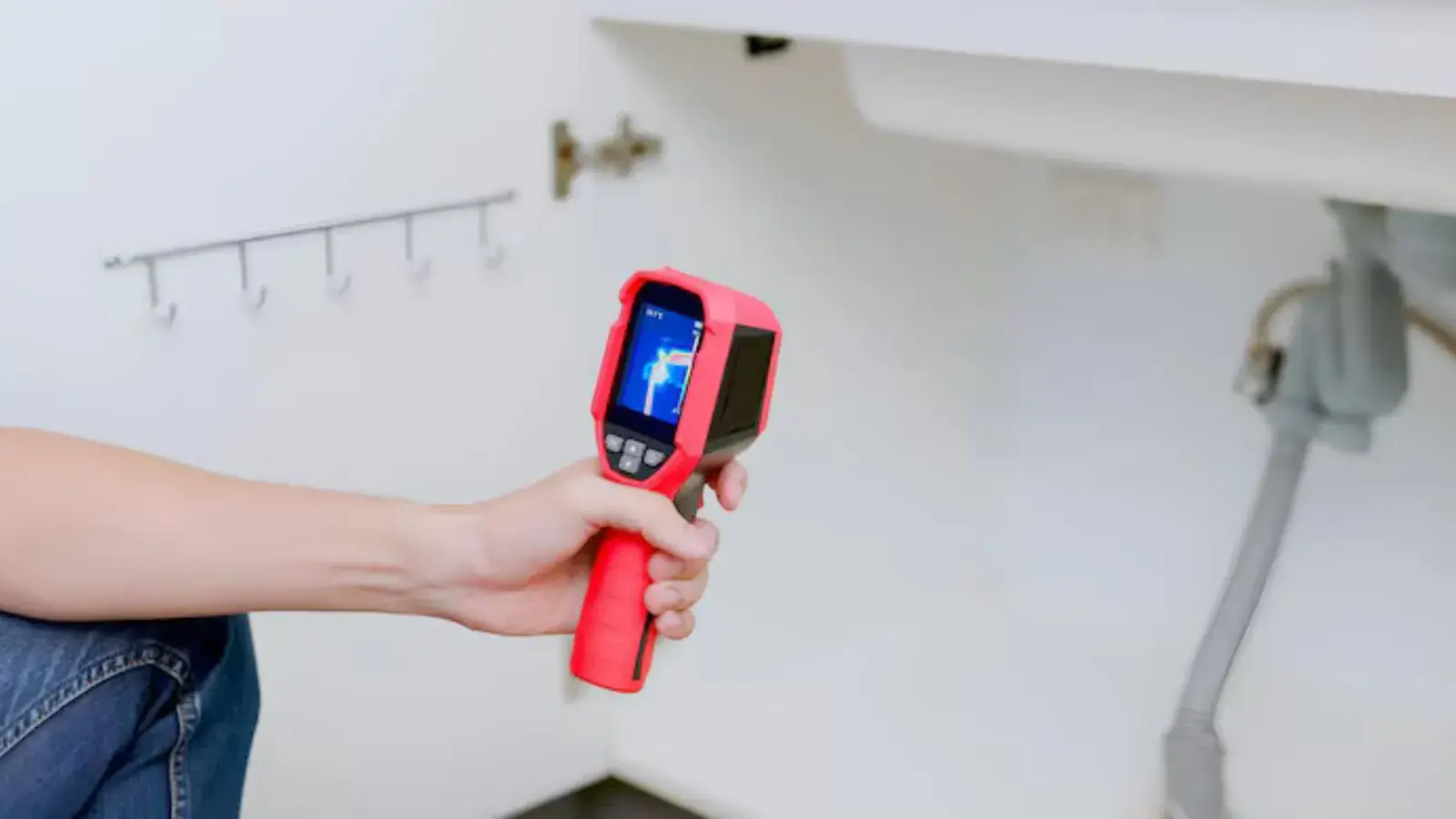
| Thermal imaging | Shows temperature differences from hot-water leaks | Hot lines under slab |
| Line tracing | Maps where pipes run under the floor | Planning a minimal opening |
Published marketplace cost guides put slab leak detection at about $150 to $400 (HomeAdvisor, 2025) or $100 to $400 (Fixr, 2025). Those are national figures, not Marina quotes. Pinpointing before cutting is almost always cheaper than guessing.
Repair options and what they trade off
Once the leak is located, there are three common ways to fix it. The right one depends on the number of failing lines and how accessible they are.
| Option | How it works | Trade-off |
|---|---|---|
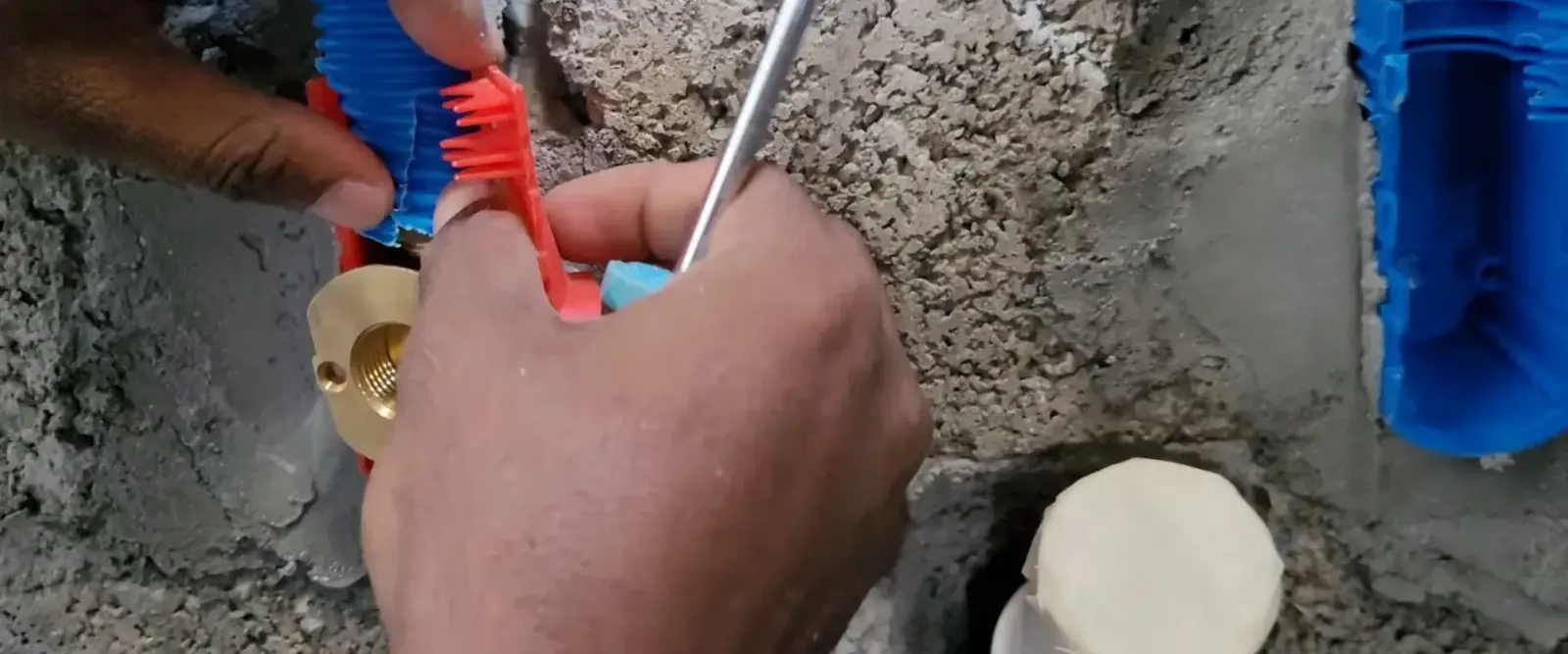
| Spot repair | Open the slab at the leak and replace the damaged section | Fixes one leak, other weak spots remain |
| Reroute | Cap the old line and run new pipe through walls or attic | Higher cost, avoids the slab long-term |
| Epoxy lining | Coat the inside of the pipe to seal leaks | Not suitable for every pipe condition |
Fixr's 2025 guide lists a typical slab leak at about $1,000 to $4,000, while HomeAdvisor's 2025 guide shows most homeowners paying between $630 and $4,400. Both are national marketplace figures. A reroute costs more up front but can be the better choice if several lines are failing. Our slab leak repair page explains each approach.
Does insurance cover a slab leak?
Check your policy. According to the California Department of Insurance guide, homeowners policies typically cover sudden and accidental water damage and do not cover damage from seepage or leaks, wear and tear, or neglect. A slow slab leak is often treated as gradual seepage.
Fixr notes that slab leaks are usually not covered, though this varies by policy. Call your insurer before repairs start, and keep photos, the meter readings and any detection report.
What to do right now
- Run the one-hour meter test and write down the readings.
- Shut off the main valve if you hear running water or see damage.
- Move rugs and valuables off damp or warm areas.
- Call a plumber rather than waiting for the floor to fail.
- Do not cut into the slab yourself.
If you smell gas anywhere in the house, leave, call 911 from a safe distance, and then call PG&E at 1-800-743-5000. A warm floor is usually a hot water line, but a gas smell is a separate emergency.
Marina's sandy ground and the meter: what the sources say
A state environmental document for a regional water project describes the Marina area as having extensive sand dunes made of unconsolidated, highly erodible sand. For a homeowner, the practical point is limited. Loose sand drains water quickly, so a leak may not show up as a puddle. That makes the meter test more important than the yard.
General plumbing knowledge adds one more point. Water flowing through loose sand can carry fine material away, which may leave voids or soft spots under a slab or a pipe trench. This is a general caution, not a measured fact about any Marina property. It supports prompt repair.
Marina Coast Water District's code puts the meter and meter box on the district's side and pipes and fixtures beyond the meter on the customer's side. A slab line is on your side. If the one-hour test points to a leak, the repair is your responsibility, and the district's rules call for repair within 72 hours.
MCWD also publishes a 24-hour line at (831) 883-5900 and a water-saving checkup you can ask about at (831) 883-5905. A checkup is a good first stop for toilets and irrigation. A slab leak needs equipment, which is where we come in. We cover Marina, Seaside and Castroville.
Frequently asked questions
Most people notice a warm patch on the floor, a higher water bill, or the sound of water when everything is off. A meter that moves with every tap closed is the clearest early sign.
Yes. The water often drains into the soil under the slab and never reaches the surface. That is why the meter and the bill are better clues than the floor.
No. Radiant heating and some ducts can warm a floor. But if you have no radiant system and one spot is warm, a hot-water slab leak is a strong possibility.
Plumbers combine pressure tests, acoustic listening and thermal imaging. These narrow the leak to a small area so any opening is small.
Quickly. Marina Coast Water District's rules say plumbing leaks must be repaired within 72 hours. A leak under a slab can also wash out soil and damage flooring.
No. It involves concrete, pressurized lines and often permits. In California, a contractor license is required for work of $1,000 or more, or any work needing a permit.
Over time, flowing water can wash fine soil away and leave a void or soften the base. That is general plumbing knowledge, not a Marina finding. It is a reason to fix leaks soon.
Call (855) 575-2890. We answer 24/7. Same-day appointments are available when we have openings, and we give a clear price before work starts.