The average cost for a tankless water heater installed is about $2,600 in national guides. HomeAdvisor (2025) puts the average near $2,630 with a typical range of $1,400 to $3,896, and Angi (2026) lists $2,638 with a range of $1,404 to $3,901. These are national figures, so treat them as a starting point for a tankless water heater in Marina, CA.
The sticker price is only part of it. Gas lines, venting, electrical work and access can move the final number well beyond the unit itself. Marina's water adds a maintenance angle too, since the district reports hard water and recommends flushing. Here is what to expect and what to ask.
Tankless against a tank: the price gap
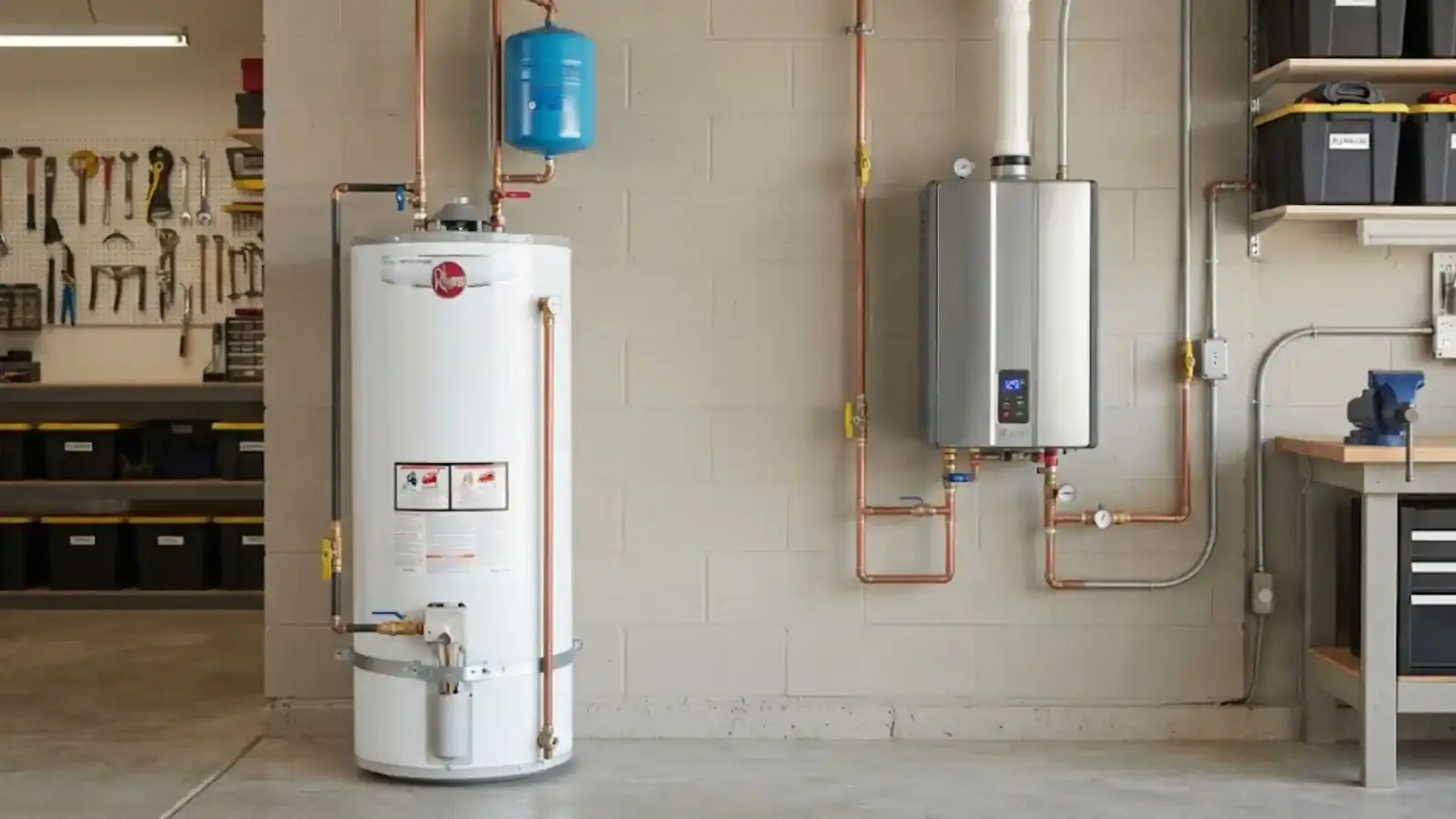
A tankless heater heats water as it flows, so it has no storage tank to keep warm. It costs more up front. One national guide describes tankless units as two to three times the price of a standard tank. Another puts the installed gap in numbers.
| Heater type | Published installed range | Source and year |
|---|---|---|
| Tank-style | $600 to $2,500 | HomeAdvisor, 2025 |
| Tank-style | $1,200 to $2,300 | This Old House, 2026 |
| Tankless | $1,400 to $3,900 | HomeAdvisor, 2025 |
| Tankless | $1,404 to $3,901, average $2,638 | Angi, 2026 |
| Tankless | $2,100 to $4,000 | This Old House, 2026 |
| Tankless, typical | Around $2,500 | Bob Vila, 2024 |
No guide we found gave a Central Coast tankless price. When one figure differs from another, it usually reflects what the guide counted in the project. We do not average the ranges, and we do not present any of them as a price you will be quoted.
What a quote usually includes, and what it may not
Labor for a tankless install ran $600 to $1,850 in one guide, so a large share of the price is work and not hardware. Permits are listed from $50 to $100 in one guide and $50 to $500 in another.
- The unit itself, sized by flow rate in gallons per minute and by how many fixtures run at once.
- Removal and disposal of the old tank.
- New valves, connectors and a service valve set for flushing.
- Venting parts and a condensate path where the model needs one.
- A permit, when the work requires one.
- Gas line changes or electrical work, which may be extra.
Ask for a written line-by-line price. We give a clear price before work starts, so you can compare it against what the guides show.
Gas line and venting considerations
These points are general plumbing knowledge, not Marina rules. A gas tankless heater can draw far more gas at once than a tank unit burns. A pipe sized for a tank may be too small, and the plumber may need to check the gas supply before the install. Electric models move that demand to the panel, which may need an upgrade.
Venting is the other big item. Tankless heaters use their own vent materials and routes, and the vent must reach outside correctly. A tank heater's old flue often cannot be reused. A national guide notes that switching fuels can add roughly $1,500 to $2,000, and tight access adds 10 to 15 percent in labor.
Plain-language rule of thumb
The closer the new heater is to the old one, with the same fuel and a workable vent path, the lower the price is likely to be. Moving it to another wall or switching fuel usually raises the bill.
Hard water in Marina and why flushing matters
Marina Coast Water District's 2025 water quality report gave total hardness at 180.3 mg/L on average, or 10.54 grains per gallon, with a range from about 4.9 to 19.3 gpg. The district's wells pull groundwater from the Salinas Valley basin, and the water is disinfected with chlorine.
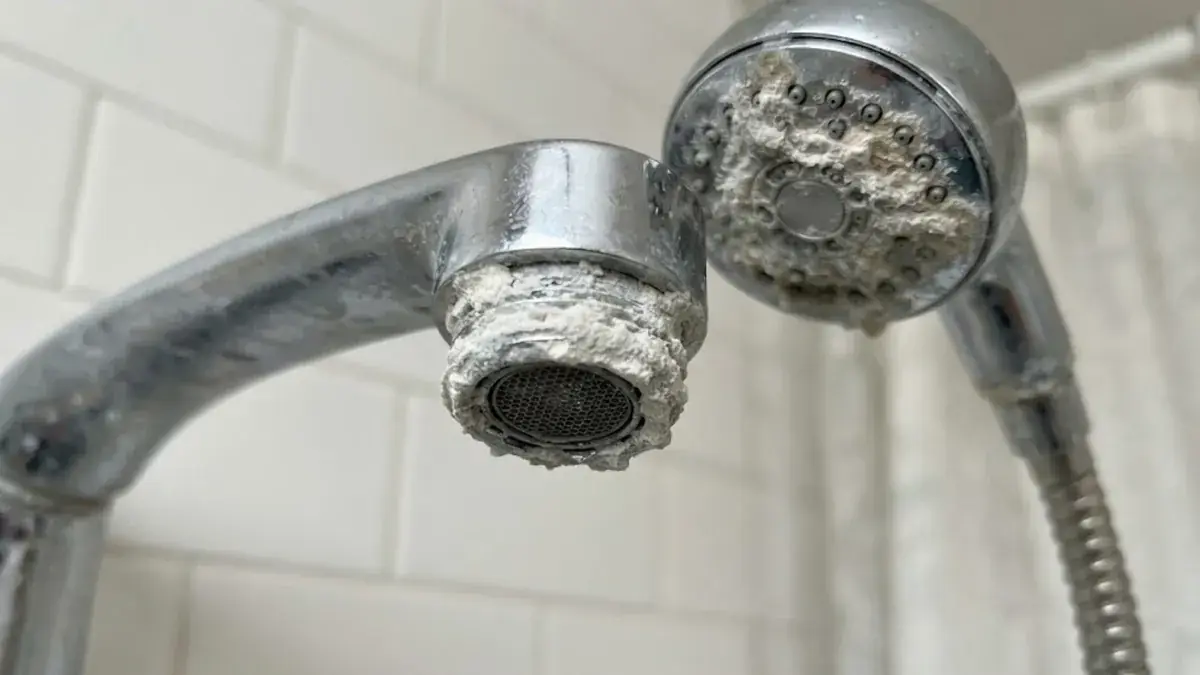
The district says there is no drinking water standard for hardness, and it recommends flushing the water heater regularly following the manufacturer's guidance. For a tankless unit, scale builds up inside the heat exchanger and narrows the passages water flows through. A flush pushes a descaling solution through the unit to clear it.
Ask the installer to include service valves that make flushing simple, and ask how often the manufacturer recommends it for your model. Whole-house softening is a separate question, and our water softener and filtration page covers it.
Is tankless worth it for your house
We do not publish savings numbers, because we have no local data on gas rates or household use. What the guides do show is a longer expected lifespan. One guide lists conventional tanks at 8 to 12 years and tankless units at about 20.
| Choose tankless if | Stay with a tank if |
|---|---|
| You want to free up floor space | The install budget is the main limit |
| The household has steady, spread-out hot water use | Many fixtures run hot water at the same time |
| Your gas line and vent path can be upgraded reasonably | The gas supply or vent would need heavy changes |
| You plan to stay for many years | You may sell the property soon |
If you want to compare, our pages on tankless water heater installation and water heater replacement explain both paths.
Permits, licensing and rebates
Water heater replacement requires a permit in several California cities, and the plumbing code covers the work. We could not confirm the City of Marina's water heater permit rule on its public pages. Call the Building Division at (831) 884-1241 before you decide.
The district's rebate page does not list a water heater rebate, so do not budget for one. Check the page again before you buy, since programs change.
Check any plumber's license with the Contractors State License Board. Plumbing is classification C-36, and a job needing a permit falls outside the $1,000 unlicensed work limit.
Marina facts that shape a tankless decision
Marina's 2025 hardness average of 10.54 grains per gallon is the number to keep in mind. The district reported a range up to about 19 gpg, so a house can see harder readings on some days. That is why service valves and a flush plan belong in the quote, not as an afterthought.
The district also reports that all service lines in its area were verified as non-lead. That speaks to the connection from the street, and it does not describe your house plumbing. If your home has old steel supply lines, ask whether the tankless connections need updating at the same time. See repiping for the larger project.
California law requires water heaters of up to 120 gallons to be braced or strapped. Tankless units mount on a wall instead, so ask your plumber how the unit will be secured and how the gas connector is protected from movement.
We install and service water heaters across Marina, and we take calls from Seaside and Castroville too.
Frequently asked questions
National guides in 2025 and 2026 show about $2,600 installed, with typical ranges from roughly $1,400 to $3,900. Your price depends on fuel, venting, gas line and access.
The unit costs more, and the install often needs gas line, vent or electrical changes. One guide describes tankless units as two to three times the price of a standard tank.
Often a plumber needs to check it, since the burner can draw a lot of gas at once. This is general plumbing knowledge. Your plumber should confirm capacity before quoting.
Minerals can build up inside the heat exchanger. The district reported an average hardness of about 10.5 grains per gallon in 2025. Flushing on the manufacturer's schedule helps limit it.
Follow the manufacturer's schedule, since it varies by model and water. Marina Coast Water District recommends regular flushing but does not set an interval.
Many California cities require one for water heater work. For Marina, ask the Building Division at (831) 884-1241, since we could not confirm it online.
The district's rebate page lists toilets, clothes washers and recirculation pumps, but not water heaters. Confirm on the district's site before you plan around one.
Many gas tankless units need electricity for the fan and controls, so they may not run during an outage. Check the model's manual before you buy.